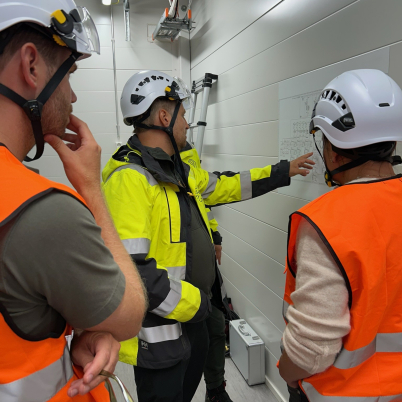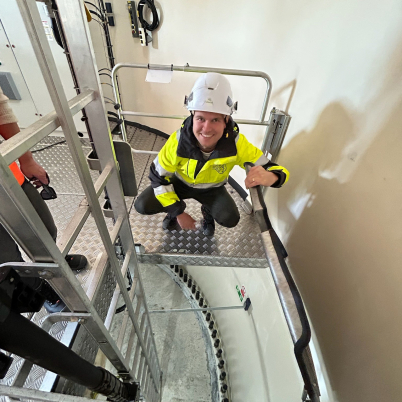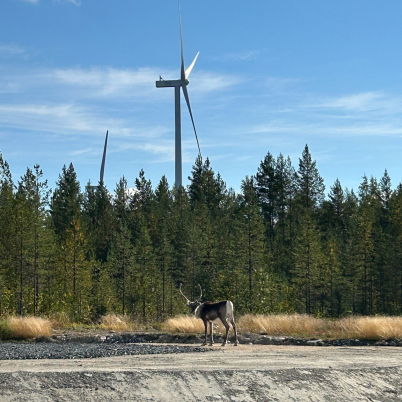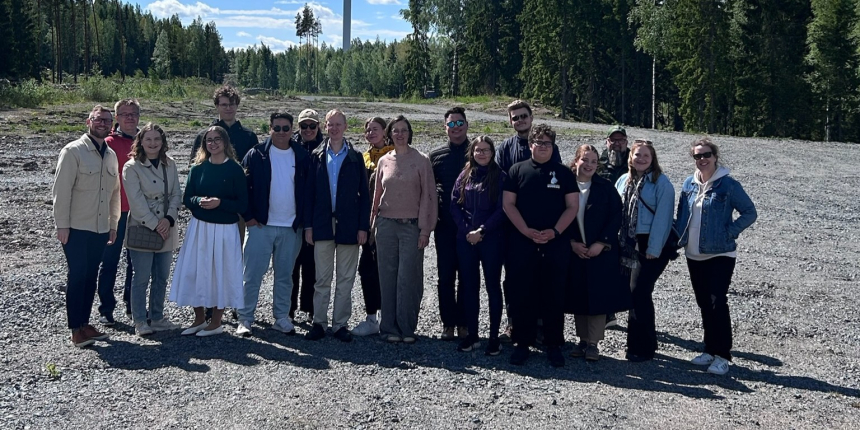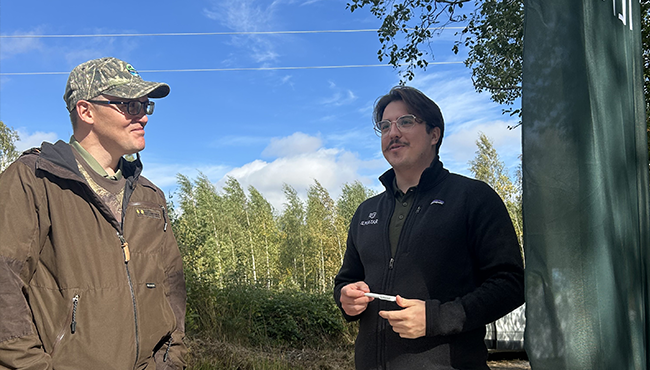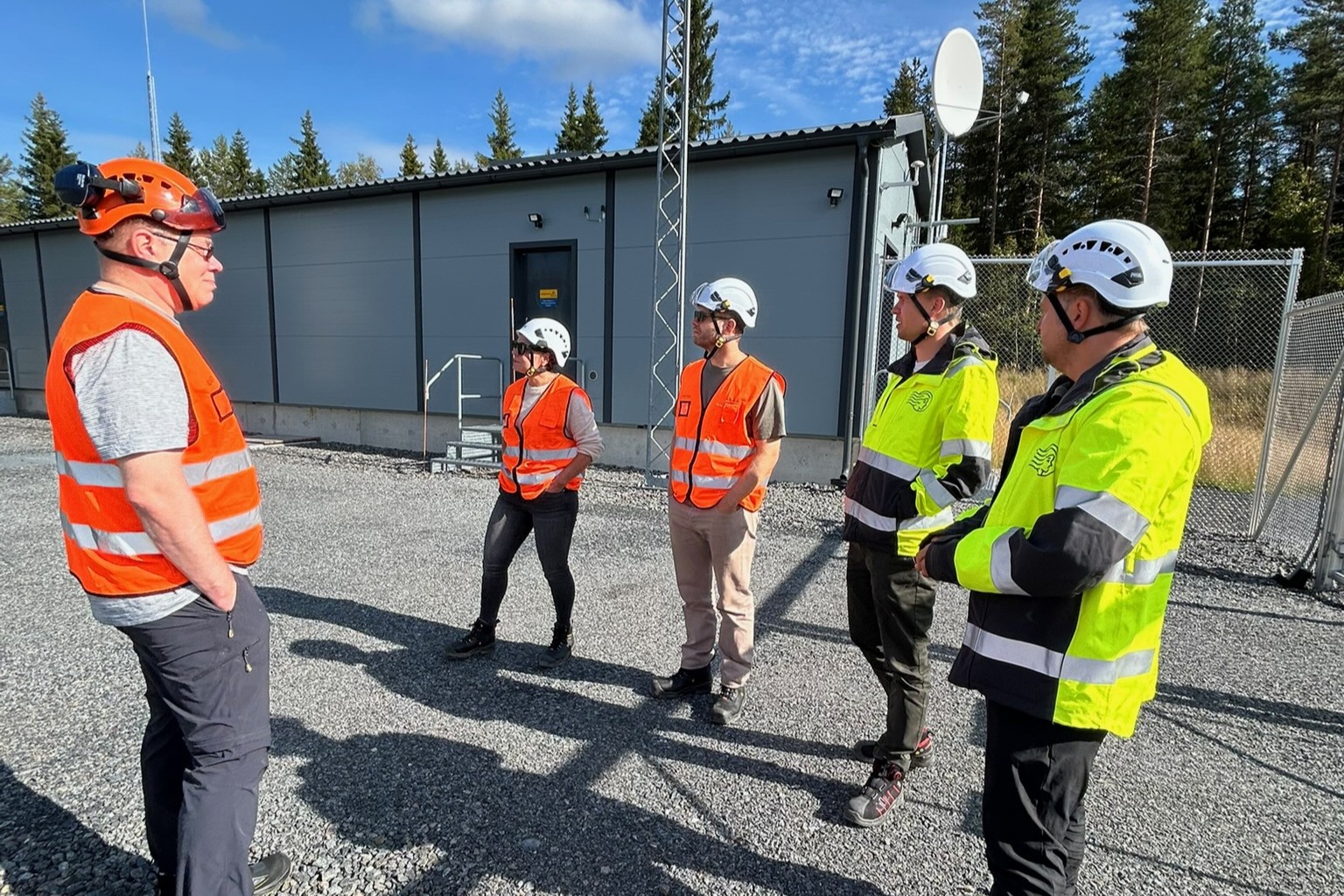
On average, Ilmatar’s wind farms host around eight visiting groups each year. The number of visits varies depending on the project lifecycle. Interest peaks during construction, while it levels off once the wind farm becomes operational. On an annual basis, around one hundred people from across Finland, representing a wide range of backgrounds, visit Ilmatar’s sites.
Diverse interests among visitors
Visitors represent various stakeholder groups, each with their own motivations for coming on site.
“Landowners are usually motivated by a desire to better understand how their land is being used. They want to see concretely how construction affects the landscape, where infrastructure is located, and how land use changes,” says Seppo Hakola, Head of Technical and Commercial Services at Ilmatar.
For local residents and decision-makers, the key interest lies in assessing the wind farm’s impact on everyday life and the environment. Topics such as noise, visual impact, traffic, safety, and the project’s contribution to local vitality and municipal tax revenue are particularly relevant. A site visit helps make the project tangible instead of a distant, abstract plan.
For students, wind farms offer a unique learning environment. During visits, renewable energy technologies, planning processes, and environmental impact assessments become concrete through real-world examples. Theory and practice meet in a way that is difficult to replicate in a classroom.
For financiers—such as banks and investors—the focus is on risk management and return expectations. A site visit supports project evaluation and due diligence, helping to ensure that the project is technically feasible, well-managed, and operating in a stable environment.
Other stakeholders in project development include contractors, authorities, and partners. Their motivation is to ensure smooth project execution, functional technical solutions, and effective coordination between parties. Site visits help build a shared understanding and strengthen collaboration.
Despite the diversity of backgrounds and objectives, for most visitors the core motivation is simple: the desire to see a wind turbine with their own eyes.
“In reality, everyone wants to see a 200-metre-tall turbine in all its glory. The scale almost always comes as a surprise. You only truly grasp the height of the tower and the size of the structures when you’re on site,” says Niklas Löf, Construction Project Manager.
The turbine nacelle is almost the size of a bus, and the elevator ride to the top of the tower takes about seven minutes.
“Fortunately, Seppo never runs out of topics, so there are no awkward silences during the lift ride,” Löf adds.
Questions from ice throw to electricity markets
During visits, many of the same questions arise—questions that also feature in broader discussions about wind power.
“In addition to noise and shadow flicker, visitors are interested in how large the turbines really are and how much electricity they produce. We’re also often asked how turbines operate in winter conditions, whether ice throw is a real risk, and how heavy individual components are,” Hakola explains.
Alongside technical topics, discussions often turn to electricity markets and the role of wind power in the wider energy system. During the construction phase, schedules become a central topic: when the wind farm will be completed and when electricity production will begin.
For landowners, economic questions are also key, such as lease agreement terms and how the transition to commercial operation affects rental levels.
Interest in wind farms often grows rapidly during construction. While the opportunity to observe a large-scale project on site is attractive, it also comes with practical constraints.
“Safety at construction sites always comes first, and contractors must be able to work without interruption. Visits require careful planning and safety briefings. Unfortunately, not all visit requests can be accommodated, even if interest is high,” Löf notes.
For Ilmatar, wind farm visits are not just guided tours—they are primarily about dialogue.
“During visits, we can openly address questions and concerns, correct misconceptions, and explain the role of wind power both locally and as part of the broader energy transition. The scale of the projects and the long-term nature of the work also become clear. These visits also allow us to build relationships that may be valuable during project development, construction, or after the wind farm is completed,” says Hakola.
During the construction phase, visits also play a concrete role in building trust. When stakeholders can see the project progress with their own eyes, uncertainty decreases.
Ultimately, the value of wind farm visits comes down to one thing: direct experience changes understanding. When you stand at the base of a turbine, its scale becomes real. When questions are answered on site, uncertainty fades. And when a project is observed up close, it becomes part of a shared reality—not just a new element appearing in the landscape.