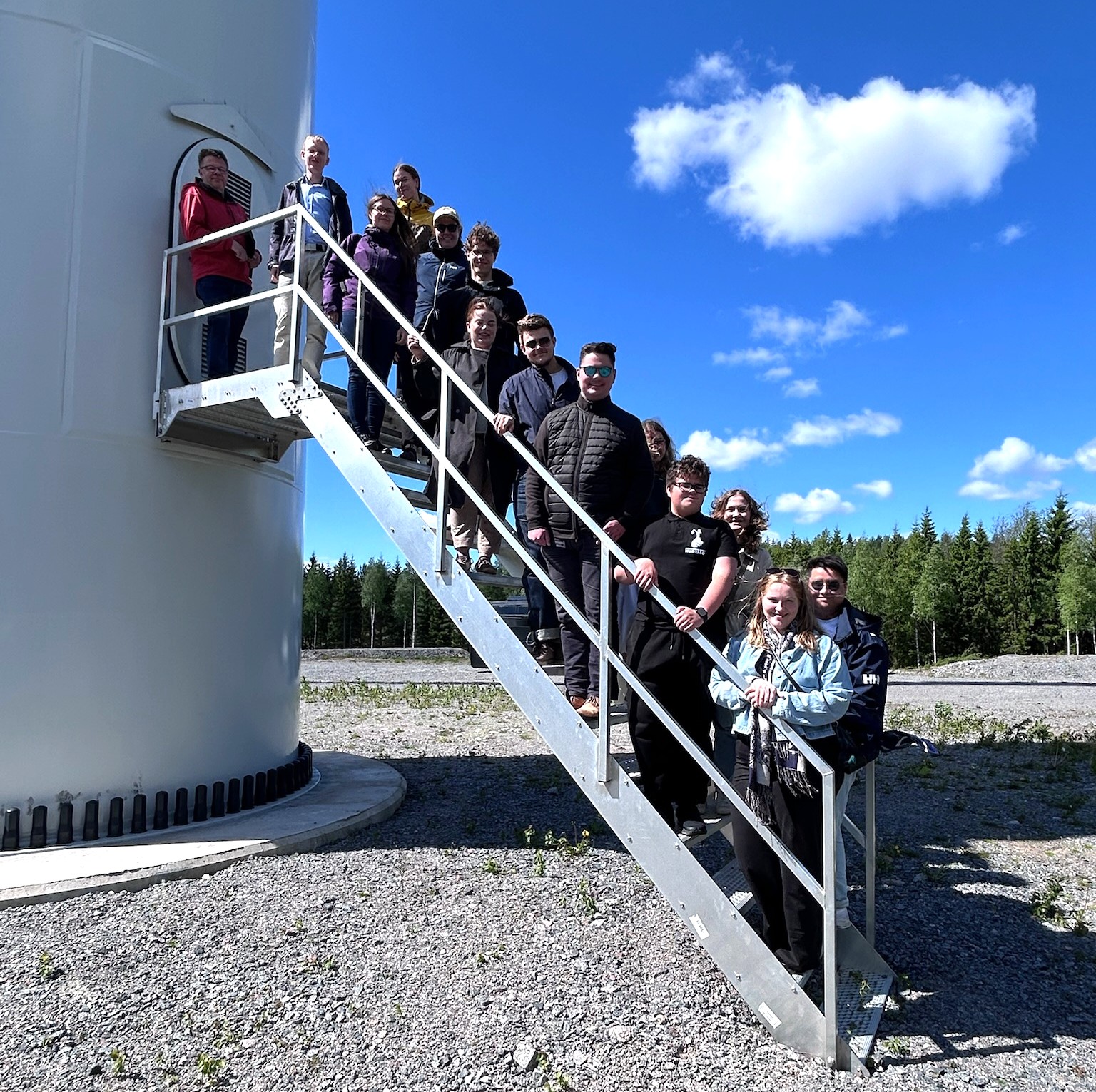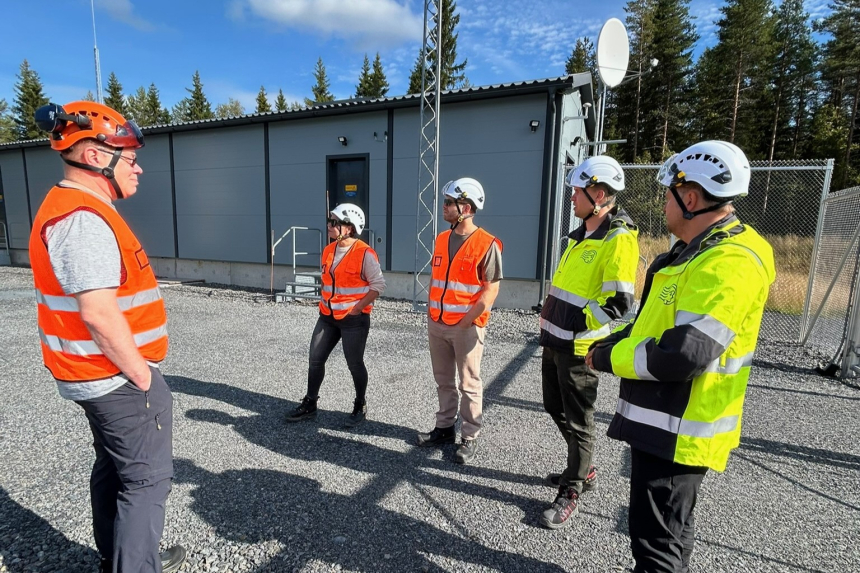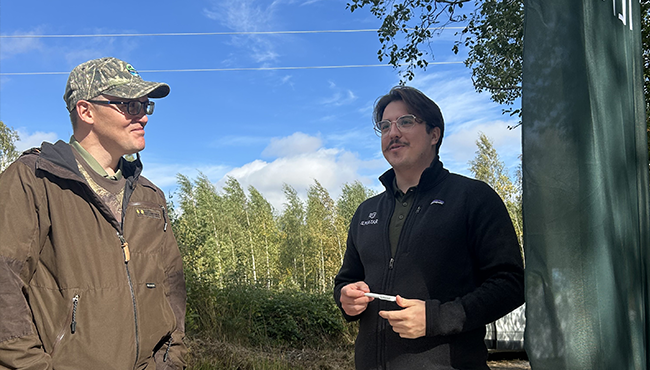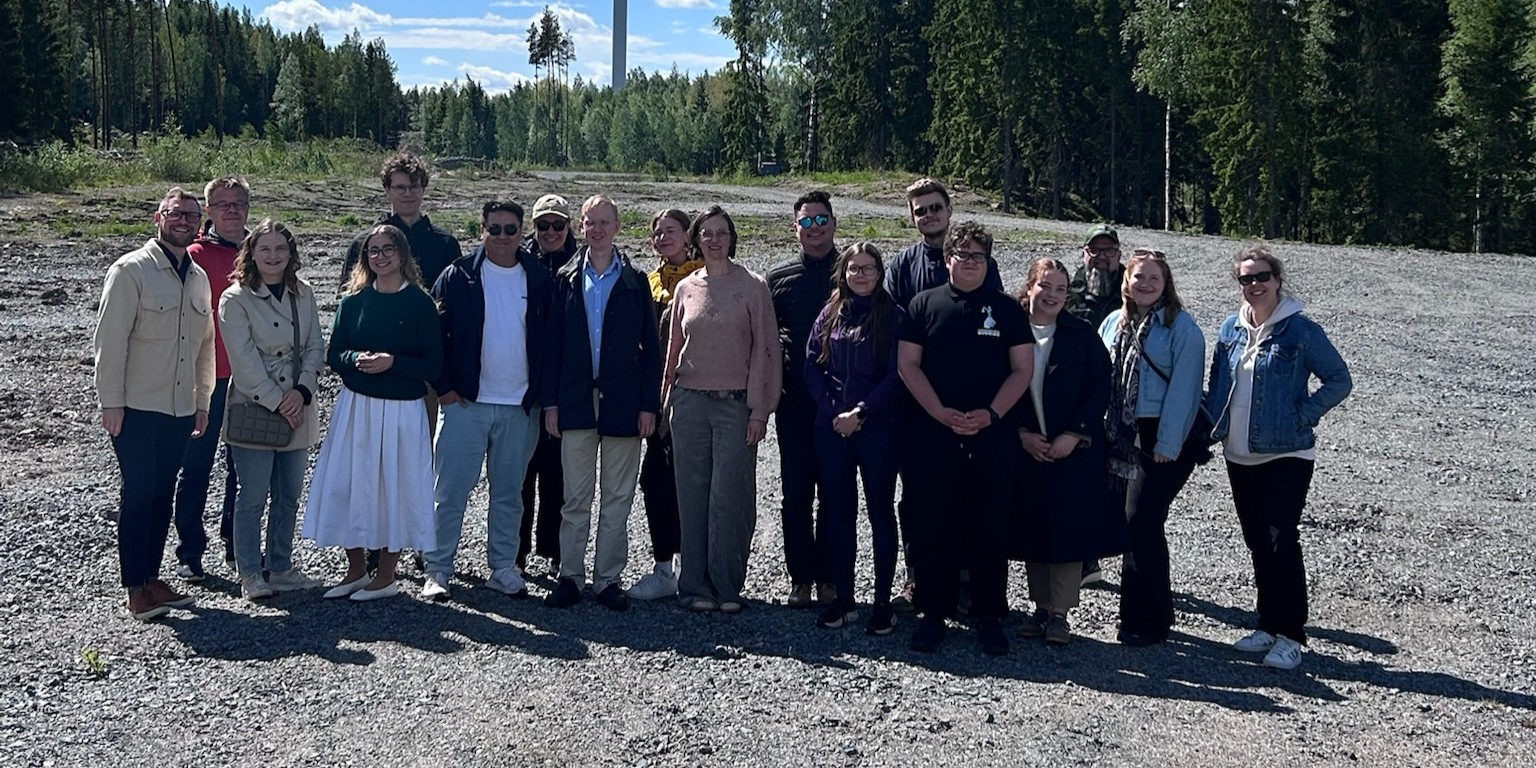
The visit brought together representatives from youth organisations of nearly all political parties. A sunny and windy day provided excellent conditions to experience renewable energy production first-hand.
The aim of the visit was to provide future decision-makers with up-to-date, fact-based information about renewable energy, as well as an opportunity to see how it operates in practice.
Building renewable energy requires predictability
Jussi Mäkinen, VP, Project Development at Ilmatar, outlined the long and multi-phase development process of a wind farm using Palma as an example.
The development of a wind farm begins with preliminary studies and landowner negotiations, continues with environmental impact assessments and zoning, and culminates in construction and the start of electricity generation. The process can take as long as 7–10 years.
Mäkinen particularly emphasised the importance of a predictable regulatory environment.
– We need to be able to assess today what electricity demand will look like in the early 2030s in order to make decisions on whether to initiate development projects, Mäkinen noted.
The visit sparked active discussion and many questions. Participants were interested, among other topics, in the geographical placement of wind turbines in Finland, security of supply, as well as the lifecycle of wind turbines and related environmental and recycling aspects, especially at the end of their operational life.
Electricity trading is built on trust – you must deliver what you promise
The practical operation of wind turbines also attracted significant interest. Seppo Hakola, Head of Technical and Commercial Service, provided insights into the day-to-day operations of wind farms, electricity trading and price formation.
One question in particular stood out: why do turbines sometimes appear to stand still or operate only briefly, even when the wind conditions are good?
– Production is carefully adjusted according to demand. In electricity markets, supply and demand must be balanced at all times, which means production cannot simply run at full capacity whenever the wind is blowing, Hakola explained.
In practice, electricity production is guided by the market in advance: wind farm output is forecast and sold approximately one day ahead. This means the company commits to delivering a certain amount of electricity to the grid at a specific time the following day.
If production falls short of the forecast, for example due to weaker winds, a deficit situation arises. The shortfall must then be covered by purchasing electricity from the market, often at a higher price.
Conversely, it is not possible to freely produce “too much” electricity either. If a wind farm generates more electricity than has been sold, the excess must be sold on short-term markets, often at a lower price. In practice, production may therefore be curtailed — turbines are stopped or output is reduced even when wind conditions are favourable.
– Electricity trading is built on trust – you must deliver what you promise, as was noted during the visit.
A memorable experience
For many participants, the visit to a wind farm was their first, offering a new perspective on wind power and renewable energy.
– It was great to see how the turbines work in practice and how production is managed. Many things became much more concrete than before, one participant commented.
The visit demonstrated that interest in energy topics is growing among young decision-makers and that hands-on experiences play a key role in building understanding.
At the same time, the day sent a strong message that the future of decision-making is in capable hands. When young people from diverse backgrounds engage in politics, are willing to explore complex issues, and consider different perspectives, it creates a solid foundation for balanced and sustainable decision-making. In major transitions such as the energy transition, this is exactly what is needed: curiosity, responsibility and a willingness to build a shared future.